Service Access Is a Purchasing Decision: Protecting Diagnostic Control in Laser Equipment Contracts
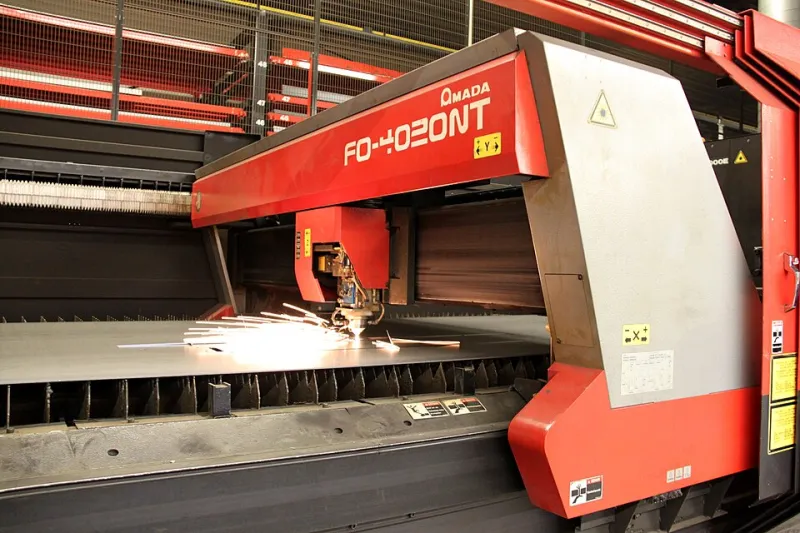
Photo: Metaveld BV, CC BY-SA 3.0, via Wikimedia Commons
When a laser system is purchased, the buyer usually focuses on power, accuracy, footprint, and price. The service model is treated as an afterthought, or as a support arrangement that can be sorted out later. That assumption is increasingly unsafe. Modern laser systems generate diagnostic data, error logs, calibration routines, and control parameters that may be accessible only through the OEM's software. If the contract does not preserve the buyer's access to those functions, the manufacturer can become a permanent gatekeeper to equipment the plant owns.
The Difference Between Ownership and Control
Owning a machine is not the same as controlling its serviceability. A plant may hold clear title to a laser cell and still be unable to read its own error history, export calibration data, or perform a board-level replacement without a vendor-issued unlock code. Remote diagnostics can be valuable, but the same connection that lets an OEM troubleshoot a fault can also become the only path to routine service. The purchasing question is not whether remote support is useful. It is whether the plant can operate and maintain the asset when the vendor's portal is unavailable, the contract is in dispute, or the response time does not match production needs.
Contract Language That Decides the Outcome
Several clauses determine whether diagnostic control stays with the buyer. The first is the definition of software access. A contract that grants a license to operate the machine may not grant the right to use service software, read logs, or perform calibration. The second is the data clause. Buyers should ask who owns the machine-generated data, in what format it is available, and whether it can be exported without vendor assistance. The third is the service-access clause. Does the buyer have the right to use third-party technicians? Are parts and diagnostic tools available on reasonable terms? The fourth is the obsolescence clause. What happens when the OEM discontinues a controller, software version, or support portal?
These questions are not hostile to the vendor. They are ordinary asset-management questions. A manufacturer that plans to run a laser cell for ten years should know how service access will work in year eight, not just in the warranty period.
A Buyer's Checklist for Diagnostic Access
Before signing, a US manufacturer should ask for a written description of the diagnostic architecture. Which functions are available to the plant? Which require OEM credentials? Which require a remote connection? The buyer should also request a sample service invoice and a sample data export. If the vendor cannot provide a sample export, that is a signal about the practical accessibility of the data.
The contract should address four protections. First, the buyer should retain the right to receive machine logs and calibration records in a readable format. Second, the buyer should have a defined path to service software for trained in-house technicians, including renewal terms and fees. Third, the buyer should have the right to use qualified third-party service providers without voiding the warranty solely because of that use. Fourth, the buyer should have a continuity plan for end-of-support scenarios, including access to diagnostic tools and parts for a defined period.
Building a Service Strategy That Does Not Depend on One Portal
Even a well-negotiated contract does not remove the need for a service strategy. The plant should maintain its own asset record: firmware versions, calibration dates, fault histories, replacement parts, and service contacts. Operators and maintenance technicians should be trained to capture error codes and export logs before a vendor is called. Spare parts should be identified by part number, not by description. Where the OEM permits it, the plant should establish a local service relationship with a qualified third party as a secondary path.
Remote diagnostics can be a strength when they are part of a layered strategy. They become a vulnerability when they are the only route. The distinction is contractual as much as technical.
The Opinion
The right-to-repair debate is often framed as a conflict between manufacturers and independent shops. For industrial laser buyers, the more immediate issue is operational continuity. A plant that cannot read its own machine's diagnostics has less control over uptime, maintenance cost, and resale value than it believes. The contract clause that governs service access is not a legal detail to be left to procurement. It is a purchasing decision about how the asset will be managed for its entire life.
The Takeaway
Before signing for a laser system in 2026, ask who controls the diagnostics. If the answer is only the OEM, the plant should negotiate a broader access path or price the dependency into the decision. Ownership should include the ability to service what you own.