Secondhand Optics, Firsthand Risk: A Due Diligence Framework for the Pre-Owned Laser Market
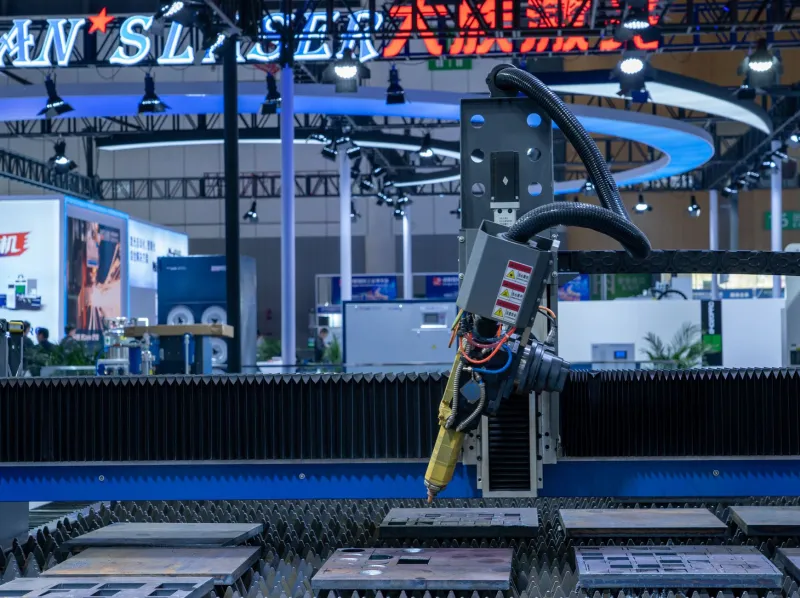
Lead times on new fiber laser systems have stretched from weeks to quarters for some configurations, and American shops that cannot afford to wait have turned to the secondary market in record numbers. The result is a thriving trade in pre-owned laser cutting, welding, and marking systems — some of them excellent values, others quietly carrying six figures of deferred problems.
The difference between the two is rarely visible from the control panel. It emerges through disciplined due diligence, and shops that skip that step frequently discover that the machine they bought at a discount came with the previous owner's bad habits attached.
Start With the Service History, Not the Machine
A used laser system is only as trustworthy as its paper trail. Ask for complete service records, including annual maintenance logs, resonator replacement documentation, and any warranty work performed. A seller who cannot produce these records is either disorganized or hiding something — and in practice, both scenarios carry risk.
Pay particular attention to whether the unit was covered by a manufacturer or third-party service agreement. Machines maintained under contract typically have documented calibration intervals, genuine replacement parts, and verified consumable usage. Machines serviced in-house by a shop with thin technical staff often have aftermarket components, uncalibrated optics, and a maintenance history that exists only in a departed technician's memory.
The Hours Question: What the Odometer Doesn't Show
Every used laser has a usage counter, and every experienced buyer knows that counter can mislead. Laser hours logged in light-gauge sheet metal cutting are not equivalent to hours spent running thick plate at maximum power. Two machines with identical operating hours can have radically different wear profiles on the resonator, focusing optics, and motion system.
Request a beam quality test — an M² measurement performed on-site or with documented recent results. A degraded beam profile will reveal cumulative optical wear that an hour count conceals. Similarly, ask for recent cut test samples on the material grades and thicknesses your operation actually runs. A machine that cuts clean on 16-gauge stainless may struggle on half-inch mild steel, and the seller's demo video was almost certainly filmed at the machine's most flattering setting.
Red Flags Worth Walking Away From
Certain findings should end the negotiation regardless of price. Watch for:
- Evidence of thermal events. Scorch marks around the resonator housing, discolored wiring, or replaced cooling components suggest the chiller system was neglected. Thermal damage in a laser system is rarely isolated; it propagates.
- Aftermarket or mismatched consumables. A nozzle and lens inventory full of off-brand parts hints at a previous owner who deprioritized quality — and possibly calibration.
- Expired or non-transferable service agreements. Some manufacturer warranties terminate on resale. Confirm in writing what coverage, if any, transfers with the machine.
- Motion system slop. Run a test cut on a detailed geometry with tight corner control. Racked ball screws or worn linear guides show up immediately as rounded corners and inconsistent kerf.
- Obsolescence risk. Verify that the control software and CNC are still supported. A mechanically sound machine running an unsupported controller can become a very expensive paperweight at the next software failure.
Why Some Used Machines Are Genuine Bargains
The secondary market is not uniformly dangerous. The best opportunities typically come from three situations: lease returns from large contract manufacturers who maintained equipment meticulously but rotate fleets on a fixed schedule; shop closures driven by ownership or market factors rather than equipment problems; and technology refreshes where a growing operation replaced a perfectly serviceable machine to gain capacity, not because the machine failed.
In each case, the seller had reasons unrelated to equipment health, and the maintenance records will show it. Ask why the machine is for sale. A credible answer backed by documentation is worth more than any discount.
Budget for the Inspection You'll Wish You'd Paid For
For any purchase above roughly $50,000, an independent third-party inspection is inexpensive insurance. A qualified laser service technician can evaluate beam alignment, resonator output, motion accuracy, and chiller performance in a single day. The cost is trivial against the price of discovering a failing resonator three weeks after the rig leaves your loading dock.
The used laser market rewards buyers who treat the purchase like the capital decision it is. Slow down, demand documentation, test the machine on your materials, and walk away from anything that raises unexplained questions. The bargain that survives that scrutiny is real. The one that doesn't was never a bargain at all.