The Infrastructure Blind Spot: Why Laser Capital Budgets Keep Failing American Manufacturers
There is a reliable pattern in how US manufacturing facilities acquire laser systems. A capital request is submitted. Engineering specifies the equipment. Finance approves the number. The purchase order is issued. And then, somewhere between delivery and commissioning, a second, unplanned budget conversation begins.
That conversation is rarely comfortable.
Power conditioning wasn't scoped. Environmental controls weren't upgraded. Integration engineering hours were underestimated by a factor of three. The facility is now running a precision laser system on infrastructure that was never designed to support it—and the performance gap is already visible in the first production runs.
This is not an unusual story. It is, in fact, the dominant story of laser capital investment in American manufacturing.
Why the Budget Gap Exists
The root cause is structural rather than negligent. Most capital appropriation processes are built around discrete equipment line items. A laser cutting system has a model number, a price, and a delivery date. It fits cleanly into procurement workflows.
The ecosystem surrounding that system does not. Power conditioning equipment, clean dry air infrastructure, dedicated electrical service upgrades, HVAC modifications for thermal stability, vibration isolation, fume extraction, and the engineering labor required to integrate all of it into an existing production environment—these are distributed costs that touch multiple departments, multiple vendors, and multiple budget categories.
In practice, they frequently fall into the gaps between those categories. Facilities management assumes engineering will handle it. Engineering assumes it was included in the vendor quote. The vendor assumes the facility is ready. No one is lying. Everyone is wrong.
The Components That Get Left Out
A rigorous total-cost-of-ownership analysis for a laser system installation should account for several infrastructure categories that standard equipment budgets routinely omit.
Power quality and conditioning. Industrial facilities carry electrical noise, voltage fluctuations, and harmonic distortion that precision laser systems are not designed to absorb. Power conditioning equipment—line reactors, isolation transformers, active power filters—adds meaningful cost and is rarely included in base equipment quotes. Facilities that skip this step often spend the first six months of operation troubleshooting performance anomalies that trace directly back to supply voltage instability.
Environmental control. Laser systems are sensitive instruments. Temperature swings, humidity variation, and airborne particulate all affect beam quality, optic longevity, and calibration stability. Many manufacturing floors were not designed with these tolerances in mind. Bringing an existing space into spec may require dedicated HVAC zoning, positive pressure enclosures, or full cleanroom partitioning depending on application requirements.
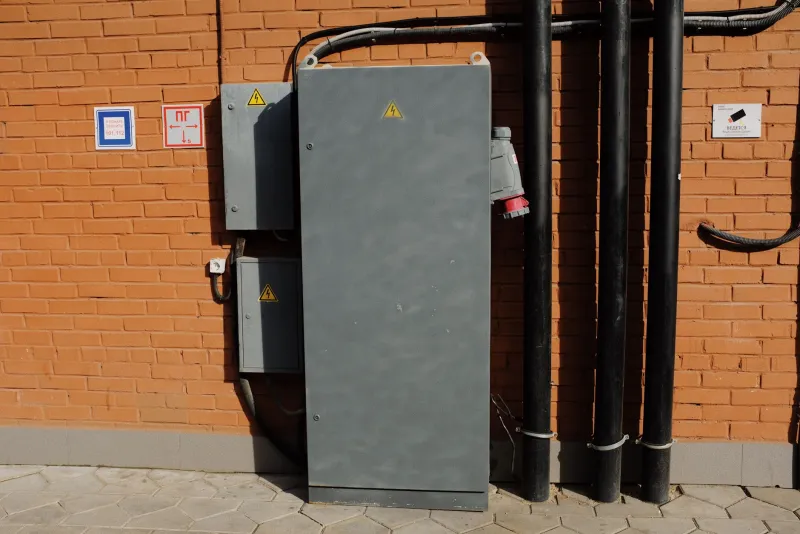
Electrical service infrastructure. High-powered laser systems frequently require dedicated electrical service that exceeds existing panel capacity. The cost of service upgrades, conduit runs, and transformer installations belongs in the laser budget. It rarely appears there.
Integration engineering. Connecting a laser system to existing MES platforms, CNC controllers, ERP systems, and quality inspection workflows requires skilled integration engineering that vendors typically do not provide beyond basic commissioning. Facilities that budget zero hours for this work discover the cost when production timelines slip.
Operator and technician preparation. Training costs are frequently underestimated in duration and scope. A two-day vendor training program does not produce operators capable of maintaining system performance over a multi-year lifecycle.
The Performance Consequences
Under-funded infrastructure doesn't just create cost overruns. It creates performance ceilings that facilities often misattribute.
A laser system operating on unstable power will produce inconsistent output that looks like a calibration problem. A system running in an uncontrolled thermal environment will exhibit beam drift that looks like mechanical wear. A system that was never properly integrated into the production workflow will generate data that no one reads and alarms that no one responds to correctly.
The system performs below specification, and the manufacturer's first instinct is to call the equipment vendor. The vendor runs diagnostics, finds nothing wrong with the laser, and the facility is left with a performance gap and no clear owner.
This is the infrastructure blind spot made operational.
How Forward-Thinking Facilities Are Restructuring Capital Planning
A growing number of US manufacturers are adopting what might be called a systems-first budgeting model—one that begins not with the laser equipment specification but with a facility readiness assessment.
Before a capital request is submitted, these facilities commission an infrastructure audit that maps existing electrical capacity, environmental conditions, integration architecture, and workforce readiness against the requirements of the intended system. The gaps identified in that audit become line items in the capital request alongside the equipment itself.
The result is a budget that is larger on paper but more accurate in practice. Facilities using this approach report fewer post-installation surprises, shorter time-to-production, and more predictable long-term operating costs.
Some facilities have formalized this by applying a multiplier to equipment cost as a starting-point infrastructure estimate. While the appropriate multiplier varies significantly by facility condition and application complexity, internal benchmarks at several mid-size manufacturers suggest that infrastructure, integration, and training costs frequently represent 30 to 60 percent of the base equipment price.
That number is not in most capital requests. It should be.
The Procurement Process Problem
Addressing the infrastructure gap ultimately requires changing the procurement process, not just the budget spreadsheet.
Vendors should be required to provide facility readiness documentation alongside equipment specifications—a clear statement of the electrical, environmental, and integration prerequisites for the system to perform as specified. Facilities should treat those prerequisites as binding requirements, not suggestions.
Internal capital planning templates should include dedicated infrastructure line items as mandatory fields rather than optional additions. Finance teams should be educated on why a laser system budget that covers only the laser is incomplete by definition.
None of this is technically complex. It requires discipline and institutional willingness to have a more honest conversation about what precision manufacturing infrastructure actually costs.
The manufacturers getting this right are not spending more money overall. They are spending the same money with fewer surprises—and running systems that perform the way they were designed to perform from the first production shift.
That is the outcome the equipment budget was always supposed to deliver.