When Your Laser System Arrives and Your Factory Isn't Ready: The Real Cost of Integration Failure in Modern Manufacturing
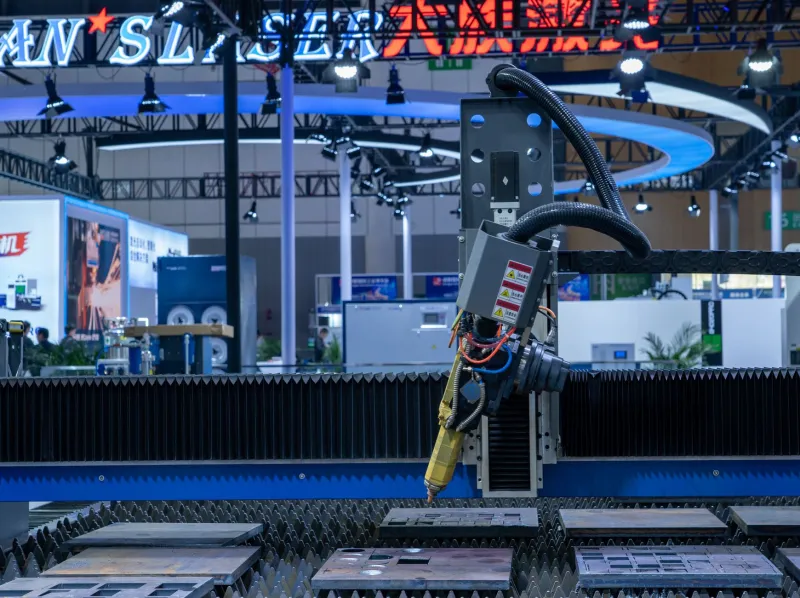
The demonstration goes flawlessly. The application engineer runs the system through its paces on the vendor's floor. Cycle times are impressive. Precision metrics exceed specification. The software interface is clean, the data outputs are rich, and the integration story the sales team tells is entirely convincing. The purchase order is signed.
Three months later, the system is on the production floor—and it is not talking to anything else in the facility. The MES cannot read its output format. The ERP has no pathway to receive its production data. The SCADA architecture that governs the rest of the line treats the new laser as a foreign object. And the engineering team that was supposed to have solved this by now is buried in a custom middleware project that has already consumed twice its allocated budget.
This is not a hypothetical. It is the operational reality for a substantial number of US manufacturers who have invested in advanced laser equipment without adequately scoping the integration work required to make that equipment function as part of a connected production environment.
The Vendor Integration Narrative vs. Shop Floor Reality
Modern laser systems are, in isolation, impressively capable of generating and communicating data. They produce process telemetry, quality metrics, and operational logs at a volume and granularity that would have been extraordinary a decade ago. Vendors are understandably eager to highlight this capability. The phrase "seamlessly integrates with your existing systems" appears with remarkable frequency in laser system marketing materials.
The operational definition of "seamless," however, varies considerably between vendor claims and customer experience. From the vendor's perspective, integration capability means the system supports standard industrial communication protocols—OPC-UA, EtherNet/IP, MQTT, or others—and exposes data through documented APIs. That is a legitimate and meaningful technical claim. What it does not mean is that the system will automatically connect to whatever production software architecture the facility happens to be running.
The gap between those two meanings is where integration projects go over budget, over schedule, and occasionally off the rails entirely.
Protocol Mismatches and Legacy Architecture
US manufacturing infrastructure is not a uniform environment. It is a layered accumulation of systems acquired across different technology eras, from different vendors, under different technical standards. A facility that installed its MES in 2011, upgraded its SCADA in 2016, and added an ERP integration layer in 2019 is operating a production stack with at least three distinct communication paradigms—none of which was designed with the other two in mind.
When a new laser system arrives with its own preferred communication protocol, the probability that it aligns natively with all three existing layers is low. More commonly, the facility faces a protocol translation challenge: the laser speaks one language, the MES speaks another, and building the interpreter between them requires engineering work that was not scoped in the original capital project.
The scope of that work depends on the specific systems involved, but it is rarely trivial. Custom middleware development, where required, can consume hundreds of engineering hours. Even when commercial integration platforms exist that can bridge the protocol gap, configuration, testing, and validation add weeks to the deployment timeline. And every week the system is installed but not fully integrated is a week in which the facility is not capturing the production data it purchased the system to generate.
Data Pipeline Failures and Their Downstream Effects
Beyond protocol-level mismatches, integration projects frequently encounter data pipeline failures that are subtler but equally consequential. These occur when data is technically flowing between systems but is being interpreted incorrectly on the receiving end.
Data pipeline failures in laser system integration commonly involve timestamp synchronization errors that corrupt production sequence records, unit-of-measure discrepancies that render quality metrics uninterpretable, and field mapping mismatches that route laser process data into incorrect database fields. Each of these failures is individually correctable, but identifying them requires systematic testing across the full range of production scenarios—a process that is time-consuming and often deprioritized in the push to get production running.
The downstream effects are not limited to data quality. When production management systems are receiving incorrect or incomplete data from a laser system, the decisions made on the basis of that data are compromised. Yield calculations are inaccurate. Maintenance scheduling is uninformed. Quality trend analysis produces misleading signals. The facility has a sophisticated laser system generating rich operational data, and that data is functionally unavailable to the people who need it.
Vetting Vendor Integration Claims Before Purchase
The most effective point to address integration risk is before the purchase order is signed. This requires a different kind of due diligence than most capital procurement processes include—one focused not on what the laser system can do in isolation, but on what it will do in the specific technical environment of the purchasing facility.
Practical pre-purchase integration vetting should include a detailed protocol compatibility review between the laser system's communication stack and every production software layer the facility operates. It should include reference conversations with existing customers who have deployed the same system in environments of comparable architectural complexity. It should include a contractual scope-of-work definition for vendor integration support that specifies deliverables, timelines, and escalation procedures when integration milestones are not met.
Facilities should also request access to the system's API documentation before purchase, not after. A vendor that is reluctant to provide technical documentation prior to contract execution is signaling something worth understanding before the capital commitment is made.
Quantifying Integration ROI—and Integration Risk
For manufacturing finance teams evaluating laser system investments, integration cost and risk deserve explicit treatment in the capital justification model. A laser system whose purchase price is $400,000 but whose total integration cost adds $75,000 in engineering labor and $30,000 in commercial middleware licensing is a $505,000 investment—and should be evaluated as such.
Equally important is the opportunity cost of delayed integration. If a system that was intended to be fully operational within 90 days of delivery takes 180 days to reach that state due to integration complexity, the production benefit that justified the purchase has been deferred by a full quarter. Depending on the volume of production the system was expected to handle, that deferral can represent a material impact on the investment's return timeline.
Building integration realism into the capital planning process is not pessimism. It is the kind of operational precision that separates facilities that consistently extract value from technology investments from those that consistently underperform their own business cases.
The Strategic Implication
The laser system that cannot communicate with the production environment around it is not a fully deployed asset. It is a high-value island—capable in isolation, constrained in context. For US manufacturers competing on productivity, quality, and data-driven decision-making, that constraint has a price. Recognizing it before purchase, rather than after installation, is the difference between a planned investment and an expensive lesson.