Augmented or Replaced? What AI Diagnostics in Laser Systems Actually Mean for the Operators Running Them
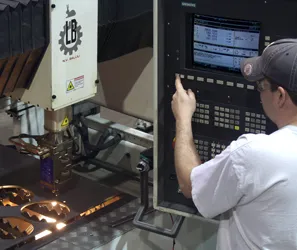
Let me be direct about something the industry tends to soften: the experienced laser operator who built a career on listening to a machine, reading its behavior, and diagnosing problems through accumulated instinct is facing a structural shift in the value of those skills. Not a gradual evolution. A structural shift.
This is not a comfortable observation to publish. But manufacturing professionals deserve honest analysis more than they deserve reassurance, and the honest analysis here is complicated enough to resist easy conclusions.
What AI Diagnostics Actually Do on the Floor
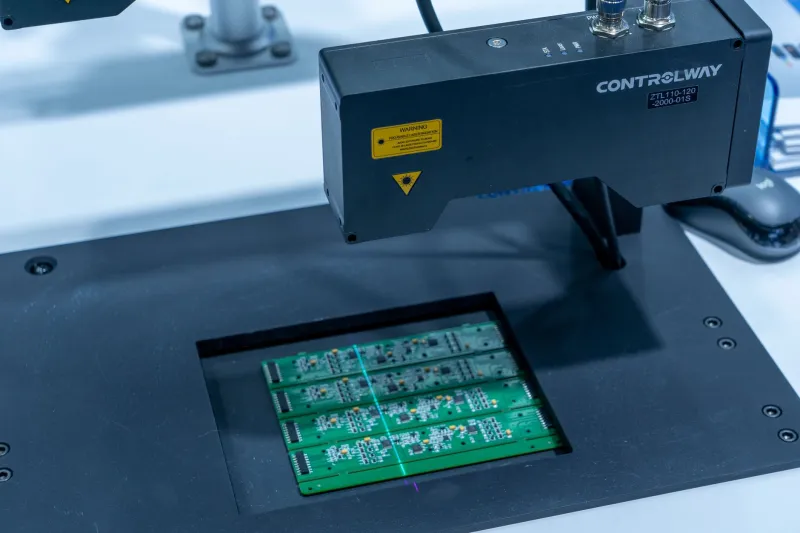
Modern high-end fiber laser systems are increasingly shipping with embedded condition monitoring that goes well beyond traditional fault codes. Thermal imaging of optical components, real-time beam quality tracking, predictive maintenance algorithms trained on fleet-wide failure data, and automated parameter correction during production runs are no longer experimental features. They are becoming standard offerings from manufacturers competing for the premium segment of the North American market.
What these systems can do that a veteran operator cannot is process continuous streams of sensor data across dozens of variables simultaneously—without fatigue, without distraction, and without the confirmation bias that affects every human diagnostic process. A system trained on ten thousand failure events across a global install base will identify early-stage resonator degradation before any technician can hear, see, or measure it through conventional means.
That is not a criticism of operators. It is an accurate description of what machine learning does well.
The Skills Being Commoditized
For the past three decades, the most valuable laser operators in American manufacturing were those who had accumulated enough system-specific experience to function as the diagnostic layer between the machine and the maintenance team. They knew when a sound changed. They recognized a cut quality deviation before the quality inspection caught it. They could coax acceptable performance from a system running outside its ideal parameters because they understood its particular behavior.
Those skills had genuine economic value because they were difficult to transfer and impossible to document completely. They lived in people.
AI diagnostic systems are, in a precise sense, an attempt to document and operationalize exactly that kind of knowledge at scale. When a machine learning model is trained on annotated fault histories from thousands of machines, it is ingesting the accumulated diagnostic experience of an entire industry's worth of operators—and then making that experience available to anyone running the software, regardless of their tenure.
The skills being commoditized are not the operator's fault. They were simply the right skills for the technology environment that existed before this one.
Where the Tension Becomes Generational
The friction in facilities that have deployed AI-assisted systems is often less about job security in the abstract and more about authority in the specific. When a diagnostic system flags a parameter adjustment and a 22-year veteran disagrees with the recommendation based on their experience with this particular machine, whose judgment takes precedence?
This is not a hypothetical. It is a live conflict in facilities across Ohio, Texas, Michigan, and the Pacific Northwest, and it is being resolved inconsistently. Some plant managers defer to the experienced operator. Others default to the system recommendation. Neither approach is obviously correct in every situation, and the absence of a principled framework for resolving the conflict creates organizational tension that reduces the effectiveness of both the human and the technology.
The generational dimension is real. Operators who learned on systems that required deep intuitive engagement with machine behavior are being asked to trust software that offers no explanation for its conclusions—just a recommendation. That is a significant ask, and dismissing the resistance as technophobia misses the legitimate epistemological concern underneath it.
What the Data Actually Shows About Outcomes
Facilities that have integrated AI diagnostic tools and measured the results carefully are reporting meaningful reductions in unplanned downtime—often in the 20 to 35 percent range over the first 18 months of deployment. Defect rates in precision cutting and marking operations have dropped in environments where the system's parameter recommendations are followed consistently.
Those outcomes matter. They are the reason manufacturers are investing in these systems, and they are the reason the investment will continue regardless of operator comfort levels.
But the same data reveals something less frequently cited in vendor presentations: facilities where experienced operators collaborate with the diagnostic system—questioning anomalous recommendations, providing context the sensors cannot capture, and escalating edge cases the algorithm has not encountered—consistently outperform facilities where the system runs without meaningful human oversight.
The best outcome is not human judgment or machine judgment. It is a structured collaboration between both, with clear protocols for when each takes precedence.
What Smart Operators Should Learn Now
If the intuition-based diagnostic role is being absorbed by intelligent systems, the question for every experienced operator is where their irreplaceable value migrates.
The honest answer is: toward the boundaries of what the system can handle. AI diagnostic tools are trained on historical data. They perform well on failure modes they have seen before. They are significantly less reliable at the edges—novel failure combinations, unusual material interactions, system behavior following non-standard maintenance interventions, or operating conditions that differ substantially from the training environment.
Operators who understand the architecture of these diagnostic systems—what sensors feed them, what assumptions are embedded in the models, and where the confidence intervals degrade—become the intelligent oversight layer that the technology genuinely requires. That is a different skill set than traditional diagnostic intuition, but it is one that experienced operators can acquire more quickly than entry-level technicians, because it builds on a foundation of mechanical understanding they already possess.
Concretely: pursue training in data interpretation, not just machine operation. Learn to read the diagnostic outputs your system generates, not just the fault codes. Understand what the system is measuring and how it is reaching its conclusions. Ask vendors for documentation on model architecture and known limitation cases. That knowledge is not widely distributed yet, which means it carries premium value.
The Operator Who Cannot Be Replaced
The laser operator who becomes indispensable in the AI-assisted manufacturing environment is not the one who resists the technology or the one who defers to it completely. It is the one who can operate at the intersection—fluent enough in the system's logic to catch its errors, and experienced enough with physical laser behavior to provide context the sensors cannot supply.
That operator exists. The question is whether the industry will create the training pathways to develop more of them, or whether it will allow the transition to happen by attrition—losing institutional knowledge faster than it can be rebuilt in a new form.
The answer to that question will determine whether AI diagnostics make American laser manufacturing stronger or simply more automated. Those are not the same thing.