Legacy Hardware, Modern Expectations: The True Cost Calculus of Laser Retrofitting vs. Full Replacement
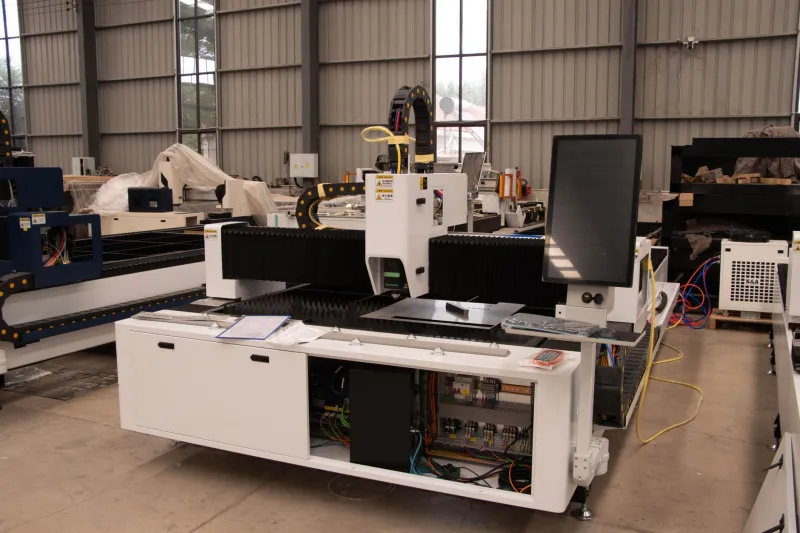
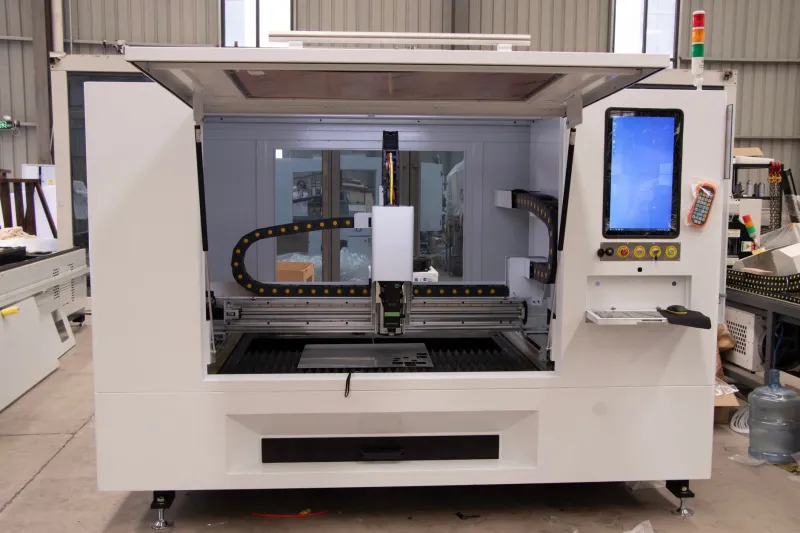
There is a moment every manufacturing facility eventually reaches: a laser system that was once a competitive asset has become a liability that the maintenance team works around rather than with. The machine still runs. Parts are still available—mostly. But productivity benchmarks that made sense in 2012 no longer satisfy 2025 customers, and the conversations in the front office have shifted from "when do we service it" to "what do we do with it."
At that juncture, vendors are ready. And their first offering is almost always a retrofit package.
Understanding why that offer is sometimes the right answer—and frequently the wrong one—requires moving past marketing language and into a structured cost analysis that most manufacturers never complete before signing a purchase order.
Why Retrofitting Feels Like the Safer Bet
The psychological appeal of retrofitting is straightforward. Your team already knows the machine. The floor space is allocated. The electrical infrastructure exists. And the capital expenditure figure is lower than a full replacement—at least on the initial quote.
Vendors understand this reasoning and price retrofit packages accordingly: high enough to be profitable, low enough to feel responsible. The result is a proposal that looks conservative but frequently underestimates the true cost of integration.
Retrofitting a 10-to-15-year-old fiber or CO₂ laser system typically involves replacing the resonator or source module, updating the CNC controller and motion system, and sometimes overhauling the cooling infrastructure. Each of those interventions sounds discrete. In practice, they are interdependent, and that interdependence is where costs accumulate.
The Integration Tax Nobody Quotes
Modern laser sources operate on communication architectures that did not exist when your legacy system was designed. EtherCAT, PROFINET, and OPC-UA are standard in current equipment. Older machines were built around proprietary protocols that may require custom middleware, translation layers, or firmware modifications just to allow new components to exchange basic status signals with existing hardware.
That middleware does not write itself. Engineering hours spent on protocol bridging can easily consume $15,000 to $40,000 in labor before a single test cut is made—costs that rarely appear in the initial retrofit proposal and that vendors are not always forthcoming about disclosing.
Beyond communication, there is mechanical compatibility. A modern, higher-power source may require revised beam delivery optics, updated shielding, or modified mounting geometry. Each modification introduces a potential failure point and extends the commissioning timeline.
Calculating Downtime as a Hard Dollar Figure
Retrofitting is not a weekend project. Depending on system complexity and parts availability, a substantial retrofit can take four to ten weeks of production downtime. For a facility running laser operations across two shifts, that window carries a concrete financial weight.
The formula is not complicated: multiply your average hourly laser production value by the number of hours the system is offline. Add the cost of any outsourced processing you must contract during the conversion period. Then add labor costs for the internal team managing the retrofit vendor's access and workflow disruptions.
For many mid-size manufacturers, an honest downtime calculation lands between $80,000 and $200,000 for a six-week retrofit. That figure rarely appears on the comparison spreadsheet sitting across from the replacement quote.
When Partial Modernization Becomes a Structural Problem
Perhaps the most underappreciated risk of retrofitting is what happens when the upgrade is successful—partially. You now have a machine with a modern laser source paired with aging motion hardware, or an updated controller operating through a mechanical system that was not designed for the tolerances your new customers require.
This hybrid configuration is not merely a performance limitation. It is a diagnostic challenge. When the system underperforms—and it will—isolating whether the problem originates in the new components or the legacy structure becomes genuinely difficult. Your maintenance team is troubleshooting across two generations of engineering logic simultaneously.
New equipment ships with unified diagnostic architecture. Every subsystem speaks the same language. Hybrid retrofitted systems do not offer that coherence, and the hidden cost of longer diagnostic cycles compounds over every year of operation.
Building the Decision Framework
A responsible retrofit-versus-replacement analysis requires four data inputs that manufacturers should compile before engaging any vendor:
1. Remaining useful life of legacy components not included in the retrofit. If the motion system, chiller, and beam delivery optics have five years of service life remaining at current maintenance spend, that value belongs in the calculation. If those components are already showing degradation, they belong in the replacement column.
2. Full integration and commissioning costs, quoted separately from hardware. Require vendors to provide a detailed labor estimate for integration engineering, not a bundled project price. The unbundled figure is frequently illuminating.
3. Downtime cost at your facility's actual production rate. Use your own numbers, not industry averages.
4. Capability gap analysis. Determine whether the retrofitted system will meet your next three years of production requirements, or whether partial modernization simply delays the replacement conversation by 24 months.
When Replacement Is the Rational Choice
Full replacement becomes the financially defensible option when two or more of the following conditions are present: the legacy mechanical structure requires significant remediation independent of the retrofit; the retrofit does not close the capability gap your customer base is already demanding; integration engineering costs exceed 30 percent of the retrofit hardware price; or the system's historical downtime rate indicates a pattern of systemic failure rather than isolated component issues.
Modern laser systems from reputable manufacturers—including Turkish precision engineering firms that have invested heavily in export-quality production for the North American market—now ship with integrated diagnostics, standardized communication protocols, and warranty structures that provide meaningful production insurance during the first operational years. That package has genuine value that does not appear in a retrofit specification sheet.
A Final Word on Vendor Incentives
Retrofit packages carry healthy margins. Replacement sales require a longer sales cycle and more competitive pricing pressure. Understanding that dynamic does not mean retrofit proposals are dishonest—many are entirely appropriate for the right system and situation. But it does mean that the burden of rigorous cost analysis falls on the manufacturer, not the vendor.
Before committing to either path, complete the four-input framework above. Have a third party—an independent systems integrator or a trusted equipment consultant—review the numbers. The decision should be driven by total cost of ownership over a five-year horizon, not by which proposal produces the smaller initial invoice.
The laser system that runs your production line tomorrow is too important to purchase on narrative alone.