Precision Has a Price: The Hidden Economics of Over-Engineered Laser Tolerances
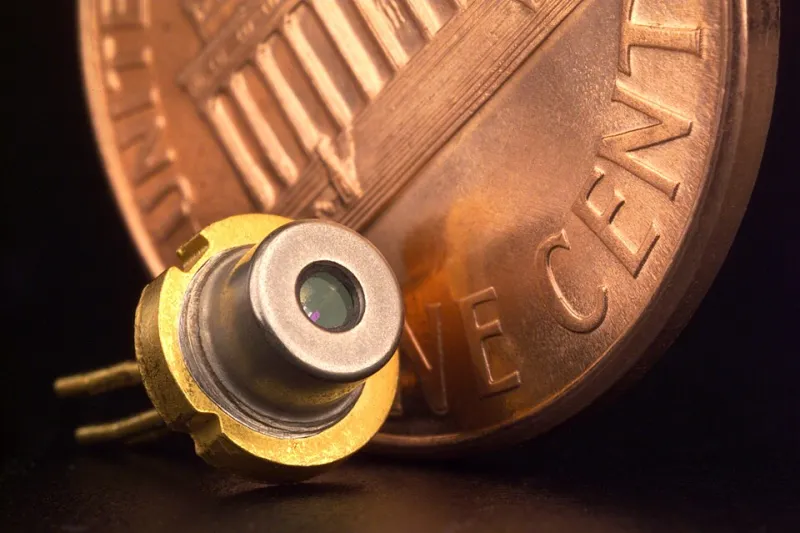
Photo: fir0002 flagstaffotos [at] gmail.com Canon 20D + Tamron 28-75mm f/2.8, GFDL 1.2, via Wikimedia Commons
There is a widely held assumption on the American shop floor that precision is an unconditional virtue. The tighter the tolerance, the thinking goes, the better the part — and the better the manufacturer. It is an intuitive belief, and in certain regulated sectors such as aerospace, medical device fabrication, and defense contracting, it is largely correct. But for a significant portion of US industrial production, this assumption is not just unnecessary. It is actively costing money.
The paradox of over-engineered laser precision is this: the resources consumed chasing tolerances beyond what a given application demands — machine time, energy, consumables, operator attention — represent real, measurable losses that rarely appear on any standard cost report. They are absorbed into overhead, attributed to general inefficiency, or simply accepted as the cost of doing quality work. They are not.
What Over-Specification Actually Looks Like in Practice
Consider a mid-sized metal fabrication shop producing structural mounting brackets for commercial HVAC systems. The customer specification calls for a cut tolerance of ±0.15 mm. The shop, operating on the premise that tighter is better, has configured its fiber laser system to hold ±0.05 mm — a standard appropriate for precision instrument housings, not structural brackets.
The immediate consequences are predictable once you know to look for them. Cutting speeds are reduced to maintain the tighter tolerance. The assist gas pressure is adjusted upward, accelerating nozzle wear. The focusing lens requires more frequent inspection. Operator intervention increases because the system flags edge conditions that would be entirely acceptable at the customer's actual specification. Each of these factors represents a direct cost. None of them generates a dollar of additional revenue, because the customer neither requested nor is paying for that level of precision.
This is not a hypothetical. It is a pattern that appears consistently across contract manufacturers, job shops, and in-house fabrication departments throughout the United States. The tolerance standard is set conservatively — or aspirationally — and then never revisited as production volumes scale.
The Financial Model Behind the Problem
To quantify the impact, consider three variables that over-specification directly affects: cycle time, consumable consumption, and reject rate behavior.
Cycle time is the most straightforward. A laser system cutting at 60 percent of its optimal speed to maintain an unnecessarily tight tolerance is consuming 40 percent more machine time per part than necessary. On a system running two shifts, five days a week, that translates to a substantial reduction in effective capacity — capacity that could be allocated to additional orders or used to reduce overtime costs.
Consumable consumption is less obvious but equally significant. Nozzles, lenses, and protective windows degrade faster under the elevated parameters required to hold tight tolerances on materials that do not demand them. A shop replacing its cutting nozzles 30 percent more frequently than necessary, across a fleet of three laser systems, is spending thousands of dollars annually on components that should not be wearing out that quickly.
Reject rate behavior is perhaps the most counterintuitive element. Manufacturers often assume that tighter tolerances produce fewer rejects. In practice, the opposite can occur. When a system is configured to hold tolerances well within its comfortable operating envelope, edge cases — minor material variation, thermal fluctuation, assist gas inconsistency — push parts outside specification even though those same parts would have been perfectly acceptable at the customer's actual tolerance. The result is rework or scrap on parts that were, by every meaningful measure, fit for purpose.
Determining the Right Tolerance for the Right Application
A structured approach to tolerance calibration begins with a straightforward question that is rarely asked formally: what does this customer actually need, and why?
The answer requires reviewing the end-use application of the part, the customer's own inspection criteria, and any downstream processes the part will undergo — welding, assembly, surface treatment — that may affect final dimensional characteristics. In many cases, manufacturers will discover that their internal quality standards are significantly more demanding than anything their customer base requires or has ever audited.
From there, the calibration process involves establishing a tolerance band that provides a meaningful margin above the customer specification without crossing into over-engineering territory. A general working principle: the internal manufacturing tolerance should be tighter than the customer requirement, but only by enough to account for normal process variation. For most structural and general industrial applications, that margin is considerably smaller than many shops currently maintain.
Machine configuration should then follow the tolerance requirement, not precede it. Cutting speed, focus position, assist gas parameters, and power settings should all be optimized for the actual specification — and documented as a named parameter set for that part family. This approach allows operators to switch between jobs without defaulting to the most conservative configuration across the board.
What Vendors Are Not Telling You
Laser system manufacturers, including many well-regarded international suppliers now serving the US market, have a commercial incentive to emphasize maximum achievable precision in their marketing materials. A system capable of ±0.02 mm sounds more impressive than one rated at ±0.10 mm, even if the vast majority of applications the buyer will actually run never come close to requiring that level of performance.
The more useful question to ask any vendor — and to demand documentation for — is not what the system can achieve under ideal laboratory conditions, but what it reliably holds across a full production shift on representative materials at realistic throughput rates. That number, combined with a clear-eyed assessment of what your customer base actually requires, is the only basis for a sound purchasing or configuration decision.
A Framework for Ongoing Tolerance Governance
Precision calibration is not a one-time exercise. As customer requirements evolve, as new part families are introduced, and as market conditions shift, the tolerance standards governing your laser operation should be reviewed on a defined schedule — ideally quarterly, and certainly whenever a new major contract is onboarded.
The review process should involve both engineering and finance. Engineering defines what is technically achievable and appropriate. Finance quantifies the cost implications of operating at different tolerance levels. The intersection of those two inputs is where optimal precision lives — not at the theoretical maximum the machine can hold, but at the economically rational level the application actually demands.
For US manufacturers competing on margin as well as quality, this distinction is not academic. It is the difference between a laser operation that generates profit and one that quietly consumes it.