Six Feet of Lost Motion: The Layout Decisions That Quietly Cap Your Laser Cell's Output
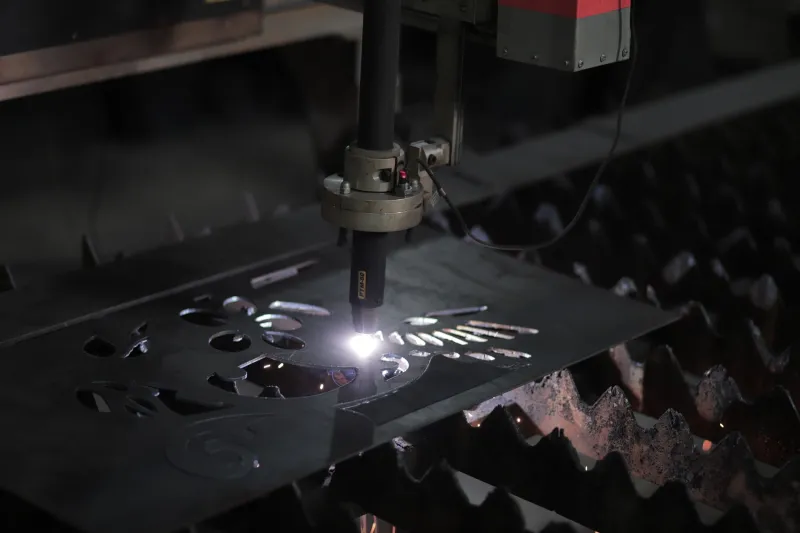
There is a familiar pattern in American fabrication shops: a new laser system arrives, performs beautifully during commissioning, and then settles into a long career of running at seventy percent of its rated capacity. Nobody made a single wrong cut. The machine is fine. The problem is everything built around it.
Facility layout is the least discussed and most durable constraint on laser productivity. Unlike parameters or staffing, a bad layout is expensive to fix after the concrete is poured. Here are the mistakes that show up most often, and what each one costs.
1. Loading Access That Fights the Material Flow
The mistake: positioning the machine so raw sheet must travel across an aisle, around a corner, or through a doorway to reach the table. Operators resort to forklift ballet, one sheet at a time.
The cost: on a system processing thirty to forty sheets per shift, each additional minute of material handling adds up to more than a full production hour lost weekly — plus the fork damage and edge nicks that become scrap. Sheet loading should be a straight-line approach from storage rack to table, full stop.
2. Exhaust and Chiller Placement Afterthoughts
The mistake: routing ductwork and chiller lines wherever there happens to be space, producing long runs, multiple bends, and service access blocked by the machine itself.
The cost: every 90-degree duct bend adds static pressure that the dust collector has to overcome, degrading fume extraction at the cutting head. Poor extraction means more lens contamination, more cleaning cycles, and shorter consumable life. Chillers buried behind equipment run hot and fail early. What looks like a ventilation decision is really an optics-consumption decision.
3. Safety Zoning That Traps the Operator
The mistake: drawing light curtains, fencing, and egress paths to the minimum code footprint, leaving the operator a two-foot strip of floor between the machine and the guardrail.
The cost: every task — nozzle changes, slat cleaning, scrap removal — becomes a contortion. Motion studies on poorly zoned cells routinely show operators spending fifteen to twenty percent of cycle time on movement that a well-planned cell would eliminate. Over a year, that is weeks of capacity spent walking.
4. No Staging for Finished Parts
The mistake: cutting sheets stack up on the table or on the floor beside it because nobody designated an unloading and sorting area.
The cost: the laser idles while the operator clears the bed. This is the single most common self-inflicted bottleneck in small-shop laser cells. A machine that waits on unloading twice per hour loses up to ten percent of available runtime — capacity you paid for and never receive.
5. Ignoring the Next Machine
The mistake: designing the cell for the laser you bought today, with zero clearance or material flow consideration for the press brake, bender, or second laser that follows downstream.
The cost: when growth comes, the expansion either can't fit or forces a full cell relocation — a six-figure project involving riggers, utilities, and downtime. Planning laser cells with a five-year capacity horizon costs nothing at design time and everything if skipped.
Layout Is Capacity Planning
The through-line in all five mistakes is the same: the laser was treated as a standalone purchase rather than the center of a production system. Shops that model material flow, operator motion, and service access before installation consistently report faster ramps to rated throughput and fewer retrofits. The machine sets the ceiling on precision. The layout sets the ceiling on everything else.