Auditing the Safeguards You Already Own: A Laser Cell Safety Review for US Manufacturers
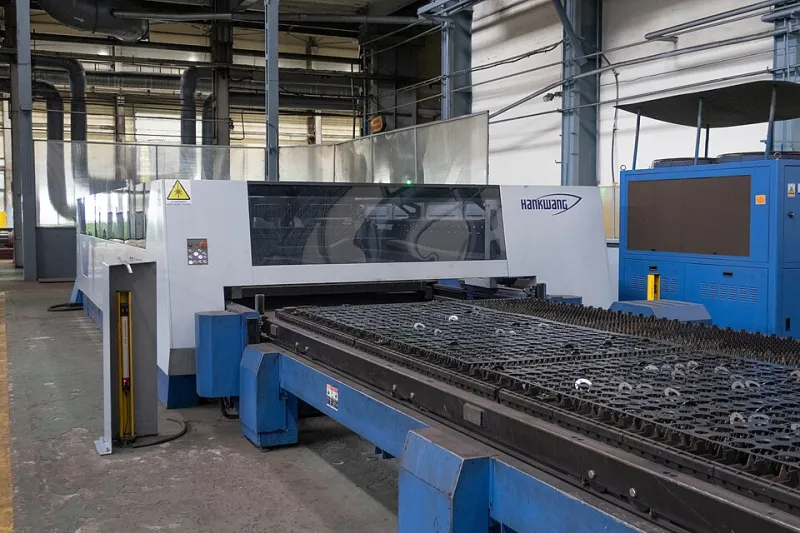
Photo: Homoatrox, CC BY-SA 3.0, via Wikimedia Commons
Laser safety audits often begin with a binder and end with a signature. The cell is inspected, the checklist is completed, and the documentation is filed. The problem is that the physical safeguards in daily use may not match the paperwork. An interlock that was bypassed to reduce nuisance stops, a window that was replaced with the wrong material, or a warning lamp that failed months ago can remain invisible until an incident, an insurance review, or an OSHA inspection makes them urgent. A practical audit treats those safeguards as operating assets, not commissioning relics.
Start With the Risk Register, Not the Binder
The most useful audit begins with the hazards the cell actually presents. For a laser cutting or welding cell, that means the beam path, the enclosure, the assist-gas system, the fume extraction, the material-handling interface, and the maintenance access points. ANSI Z136.1 provides the recognized framework for laser hazard classification, nominal hazard zones, control measures, and protective equipment. OSHA's general duty clause and applicable machine-guarding expectations sit alongside it. The audit should map each control to a specific hazard and then verify that the control is present, functional, and documented.
A risk register is more than a compliance form. It is the working list that tells a plant which safeguards are critical, which are administrative, and which have been temporarily defeated. If a bypass exists, it should appear on that register with an owner, a reason, a compensating control, and an expiration date. A bypass that is not on the register is not a temporary measure. It is an unmanaged risk.
A Plain-Language Checklist for the Cell
A practical walkthrough can be organized around five questions. First, can the enclosure be opened during operation? Every access panel, door, and service hatch should be checked against the interlock schedule. The test should confirm that the laser disables or the shutter closes as designed, not merely that the switch clicks. Second, are warning systems visible and audible at the point of use? Indicators should be checked from the operator position and from the maintenance access side. Third, is the enclosure integrity intact? Look for missing panels, cracked viewing windows, degraded seals, and unauthorized penetrations for cables or hoses. Fourth, are eyewear and barriers appropriate for the wavelength and power in use? Fifth, are maintenance procedures written for the actual cell, including lockout and beam-blocking steps?
The checklist should also include housekeeping and access control. A cell that is safe on paper can be compromised by stored material blocking a door, a ladder left against an interlock, or a temporary screen that does not meet the enclosure specification. These are not trivial findings. They are the conditions under which bypasses become normal.
Documenting Fixes Without Building a Paper Empire
The goal of documentation is traceability, not volume. A useful record for each finding includes the location, the safeguard affected, the condition observed, the risk if uncorrected, the corrective action, the owner, and the date closed. Photographs are valuable because they show the condition at the time of the audit and the condition after repair. A simple spreadsheet or maintenance-system work order is sufficient. The record should be linked to the risk register so that repeated findings become visible.
Corrective actions should be ranked by risk, not by ease. A missing interlock on a production door is more urgent than a faded warning label, even if the label is easier to replace. Where a fix requires a shutdown, the plant should schedule it rather than allow the bypass to become permanent. If a temporary compensating control is used, it should be specific and verifiable: for example, a physical lock and a posted procedure, not a verbal instruction.
The Production-Pressure Problem
Safety audits fail when they are treated as an annual event disconnected from production. Interlocks are bypassed because a guard slows a changeover. Warning lamps are ignored because they activate during normal cycle interruptions. The audit should therefore ask why a safeguard is being defeated. If the answer is that the safeguard interferes with a legitimate task, the correct response is to redesign the task or the guard, not to accept the bypass. That distinction belongs in the audit report.
For US shops in 2026, insurance carriers and customers are asking more detailed questions about machine safeguarding. A documented audit that shows findings, corrections, and ownership is stronger than a certificate that shows only that an inspection occurred. The point is not to create a paperwork project. The point is to make sure the safeguards that protect operators are the same safeguards the plant believes it has.
The Takeaway
An interlock that has been bypassed is still a risk, even if the production line is running. A practical laser safety audit verifies the physical controls, records the exceptions, and closes the gap between the risk register and the shop floor. That is a more useful outcome than a signed checklist.