The Most Valuable Diagnostic Tool in Your Facility Doesn't Plug Into Anything
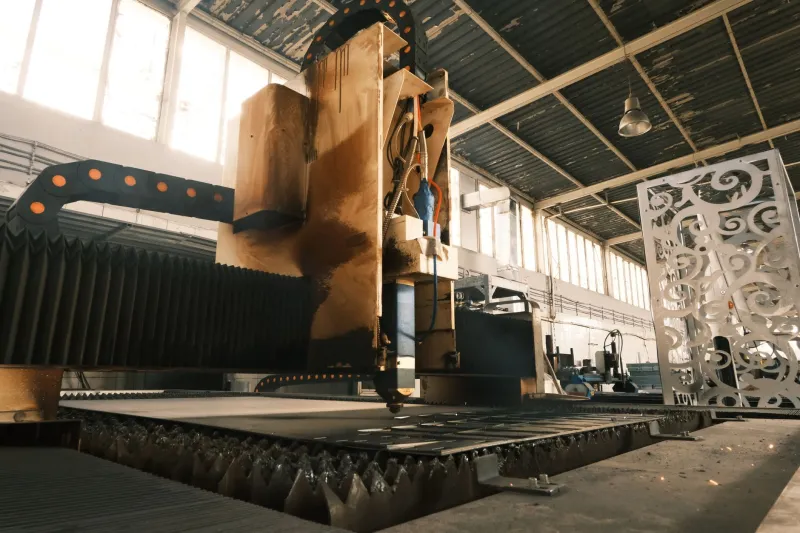
Walk into a well-run laser cutting facility on a Tuesday morning and you will likely hear the same thing: the steady hum of motion systems, the rhythmic pulse of assist gas, and the focused concentration of operators who know their machines the way a musician knows an instrument. That familiarity is not incidental. It is, in many cases, the most reliable early-warning system the facility possesses.
In an era when industrial manufacturers are pouring capital into sensor arrays, predictive analytics platforms, and condition-monitoring subscriptions, there is a quiet counterargument worth examining. The accumulated perceptual knowledge of a seasoned laser operator—what some engineers diplomatically call "operator intuition" and others simply call experience—frequently outperforms automated systems when it comes to catching the subtle, pre-failure signals that precede costly downtime.
This is not a romantic argument against technology. It is a practical one.
What Experienced Operators Actually Detect
The human sensory system, when trained and attentive, is remarkably sensitive to deviation. An operator who has run the same fiber laser platform for three years develops a baseline understanding of how that machine sounds, smells, and behaves under standard production conditions. Deviations from that baseline register before they manifest as measurable data.
Consider a few common examples from shop floors across US manufacturing facilities:
Acoustic anomalies. A slight change in the pitch of the motion system's servo drives, or an irregular cadence in the assist gas delivery, can indicate early-stage mechanical wear or pressure regulation issues. These sounds are often imperceptible to untrained ears and may not produce a sensor alert for days.
Vibration patterns. Operators who regularly place a hand on the machine frame during idle periods—a habit that looks informal but is actually diagnostic—can detect micro-vibrations that suggest bearing wear or mounting instability long before those conditions degrade cut quality.
Output inconsistencies. An experienced eye notices when a cut edge carries a slightly different oxide coloration, when dross adhesion changes character, or when the kerf width varies by amounts that a casual observer would dismiss. These visual cues are often the first evidence of beam parameter drift or nozzle wear.
Thermal behavior. Operators who work closely with their machines often notice changes in how quickly certain components warm up, or unusual heat signatures in areas that normally run cool. These observations can flag cooling circuit degradation before it becomes a throughput problem.
None of these observations require a software subscription. All of them require investment in people.
Why Automated Systems Have a Detection Lag
This is not a criticism of monitoring technology—it is a structural observation. Automated diagnostic systems are designed to flag conditions that exceed predefined thresholds. Those thresholds are set based on known failure signatures, which means the system is, by definition, calibrated to recognize problems that have already been characterized.
Operator intuition works differently. A skilled technician is not comparing current readings to a threshold; they are comparing current behavior to their own internalized model of normal. That model is continuous, context-sensitive, and updated in real time. It accounts for variables—material batch differences, ambient temperature shifts, the particular way a machine behaves after a weekend shutdown—that no sensor array is currently sophisticated enough to weight appropriately.
The practical consequence is that operators often identify emerging issues in a window of time when intervention is still inexpensive. By the time an automated alert fires, the correction may already require parts replacement rather than simple adjustment.
The Organizational Problem: Why This Knowledge Disappears
If operator intuition is so valuable, why do so many manufacturers fail to protect it?
The answer involves several converging pressures. High turnover in skilled trades means institutional knowledge walks out the door regularly. Production quotas create environments where operators feel pressure to keep running rather than pause to investigate a concern. And in some facilities, a cultural dynamic has developed where workers who raise machine concerns are perceived as creating problems rather than preventing them.
This last issue is particularly damaging. An operator who flags an unusual sound and is told to keep running has learned a lesson: their observations are not valued. The next time they notice something, they may stay quiet. The cycle compounds, and the facility loses access to the most sensitive diagnostic instrument it has.
Building a Culture That Captures Operator Knowledge
Manufacturers who want to leverage this resource need to make structural commitments, not just cultural ones.
Establish formal observation channels. Create a simple, low-friction mechanism for operators to log anomalous observations—a digital form, a shift log, or a brief end-of-shift verbal debrief with a maintenance lead. The format matters less than the consistency and the signal it sends: observations are taken seriously here.
Cross-train deliberately. Operators who rotate across multiple machines develop a comparative baseline that sharpens their anomaly detection. When you know how three similar machines sound under identical conditions, variance becomes obvious.
Pair experienced operators with newer hires. The transfer of perceptual knowledge is almost entirely informal. It happens through proximity, conversation, and shared attention. Structured mentorship programs that explicitly include machine behavior as a topic—not just procedural knowledge—help preserve institutional expertise across personnel transitions.
Close the feedback loop. When an operator's concern leads to a maintenance intervention that prevents a failure, communicate that outcome back to the operator. Positive reinforcement of accurate observations builds the behaviors you want to sustain.
Include operator input in maintenance planning. Maintenance schedules built entirely from manufacturer recommendations and sensor data are missing a data stream. Operators who work with machines daily often have accurate intuitions about which components are approaching the end of their service life. Soliciting that input before scheduling maintenance windows can improve both timing and targeting.
Integrating Human and Automated Intelligence
The strongest maintenance programs in US manufacturing do not choose between operator knowledge and automated monitoring—they integrate both. Sensor data provides quantitative confirmation of what operators observe qualitatively. Operator observations help maintenance teams know where to look when data is ambiguous.
At Selcuk Laser, our engineering perspective has always held that the technical sophistication of a laser system is only as effective as the operational environment surrounding it. Precision equipment performs to its potential when the people running it are knowledgeable, attentive, and empowered to act on what they observe.
The facilities that will manage downtime most effectively over the next decade are not necessarily those with the most advanced monitoring infrastructure. They are the ones that recognize the operator standing at the machine as an intelligent sensor in their own right—and build systems that capture, respect, and act on what that operator knows.
That investment costs less than a software license. And it compounds in ways that no algorithm can replicate.

