Engraving Is Obsolete: The Technical and Financial Case for Laser Marking in Regulated US Industries
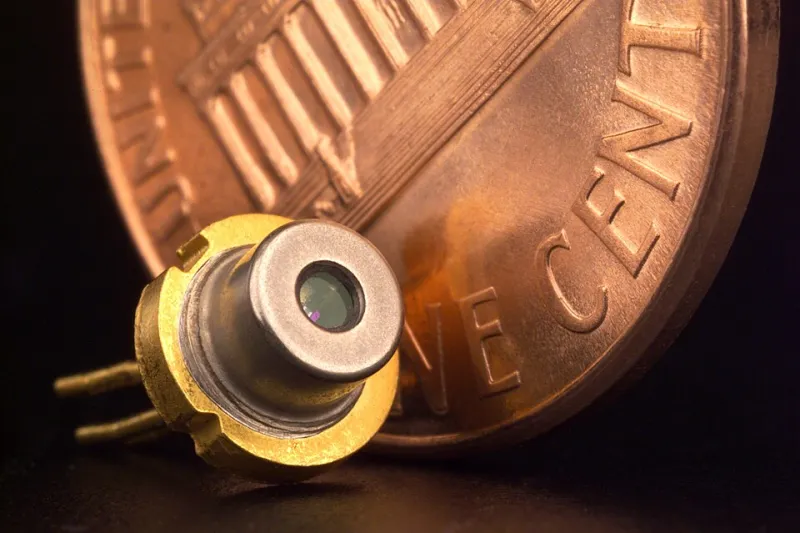
Photo: Unknown, Public domain, via Wikimedia Commons
For decades, rotary engraving and chemical etching were the default answers whenever a manufacturer needed a permanent mark on a part. They were familiar, relatively predictable, and deeply embedded in production workflows. In 2025, however, those methods are increasingly difficult to justify—technically, financially, or operationally. Laser marking has matured to the point where it is not simply a better tool for the same job; it is a fundamentally different approach to product identification that changes what is possible on the shop floor.
This guide is intended for procurement managers, process engineers, and operations leaders who are weighing that transition—or who need to articulate the business case internally.
What Traditional Engraving Actually Costs You
Mechanical engraving is a contact process. A rotating bit or stylus physically removes material, which means tooling wears, consumables accumulate, and setup time per job is non-trivial. On high-volume runs, bit replacement alone can represent a meaningful line item. More significantly, contact-based processes introduce variability: worn tooling produces inconsistent mark depth, which creates quality control overhead that rarely appears on the initial cost estimate.
Chemical etching introduces a different set of liabilities. Regulatory compliance around chemical handling, disposal, and workplace safety adds administrative burden. For facilities operating under ISO 9001, AS9100, or FDA 21 CFR Part 820 frameworks, maintaining documentation for chemical processes requires resources that compound over time.
When manufacturers perform an honest total-cost-of-ownership analysis—factoring in consumables, tooling cycles, setup labor, quality escapes, and compliance overhead—traditional marking methods frequently cost two to four times more per unit than their quoted operating costs suggest.
How Laser Marking Changes the Economics
Laser marking systems operate without physical contact and without consumables in the conventional sense. The beam interacts with the material surface through one of several mechanisms—annealing, foaming, ablation, or carbonization—depending on the substrate and the desired result. The practical consequence is a process that is highly repeatable, essentially maintenance-light between scheduled optics service intervals, and capable of marking virtually any industrial material.
Cost-per-unit comparisons favor laser marking decisively at scale. A mid-range fiber laser marking system processing stainless steel components in an automotive or medical application can achieve marks in under two seconds per part with no tooling change between part numbers. When a single production shift involves dozens of SKUs, the elimination of changeover time compounds quickly into measurable throughput gains.
For context, a facility marking 4,000 parts per shift with a traditional engraver might spend 15 to 20 minutes per shift on bit inspection and replacement alone. Over a 250-day production year, that figure represents roughly 60 to 80 labor-hours consumed by a problem that laser systems eliminate entirely.
Traceability Requirements Are Accelerating Adoption
Regulated industries are not adopting laser marking purely for cost reasons. Traceability mandates are tightening across aerospace, defense, and medical device manufacturing, and the marking method itself has become subject to scrutiny.
In aerospace, AS9132 and MIL-STD-130 compliance requires permanent, machine-readable identification on serialized components. The Defense Contract Management Agency has increased audit frequency around part marking in recent years, and suppliers who cannot demonstrate mark permanence and readability across the component's service life face real contract risk. Laser-marked 2D Data Matrix codes on titanium and aluminum components consistently outperform mechanically engraved equivalents in independent readability testing after environmental exposure.
In medical device manufacturing, FDA UDI (Unique Device Identification) requirements under 21 CFR Part 830 mandate permanent marking on Class II and Class III devices. Laser marking on surgical instruments, implantable components, and diagnostic equipment has become the preferred method precisely because it does not compromise surface integrity, introduces no foreign material, and produces marks that survive sterilization cycles that would degrade many alternative processes.
Material Versatility as a Competitive Differentiator
One underappreciated advantage of modern laser marking systems is their range across material classes. A single fiber laser platform can mark stainless steel, anodized aluminum, titanium, engineering plastics, ceramics, and coated surfaces with parameter adjustments rather than equipment changes. Traditional engraving requires different tooling configurations for different materials; chemical etching is simply incompatible with many substrates.
For contract manufacturers serving multiple industries simultaneously, this flexibility has direct revenue implications. The ability to accept a broader range of marking specifications without investing in additional equipment or specialized labor is a genuine competitive advantage when bidding on new work.
Evaluating the Right System for Your Application
Not all laser marking platforms are equivalent, and the selection process deserves careful attention. The primary variables to evaluate include:
- Wavelength: Fiber lasers (1,064 nm) are optimal for metals and most engineering plastics. CO2 systems (10,600 nm) perform better on organic materials, glass, and certain coatings. UV lasers (355 nm) are preferred for sensitive substrates where thermal impact must be minimized.
- Power and pulse duration: Higher average power enables faster cycle times, but pulse duration and peak power density determine mark quality on sensitive materials. Nanosecond pulse fiber lasers cover the majority of industrial marking applications.
- Software integration: Modern marking systems should integrate with ERP and MES platforms to enable dynamic serialization, database-driven marking, and audit trail generation without manual data entry.
- Enclosure and safety classification: Class 1 enclosed systems are appropriate for most production environments and simplify operator training and OSHA compliance.
The 2025 Transition Window
Capital equipment cycles in US manufacturing tend to cluster around tax planning timelines, and 2025 represents an active replacement cycle for many facilities that purchased engraving equipment in the 2015–2018 period. Those systems are reaching end-of-support windows from their original manufacturers, creating a natural decision point.
Manufacturers who have already made the transition report that the learning curve is shorter than anticipated. Operators who are accustomed to managing mechanical engravers typically reach competency on laser marking platforms within one to two weeks of structured training. The workflow changes are real, but the productivity gains begin within the first production month.
The question for operations leaders is not whether laser marking will eventually replace traditional engraving in their facilities. The data on cost, compliance, and capability make that outcome effectively certain. The more useful question is whether delaying that transition is costing more than the transition itself.